
Ian Patterson Wants You to Stop Being Afraid of Message-Driven Fiction
The CHOW Interview: Ian Patterson isn't just "asking questions." He's is using science fiction to offer answers, empathy, and a sharp critique of the systems that use people up.

Life provides its own bit of entertainment, and I try to capture the conflict and joy that arise from what we experience every day. My stories offer a brief respite from this crazy life, and I hope you enjoy them. There’s something new every Friday.
Pull up a spot. Subscribers receive special access to exclusive content, including new stories, a guide to the “Space Between” the novels, soundtracks, and more...
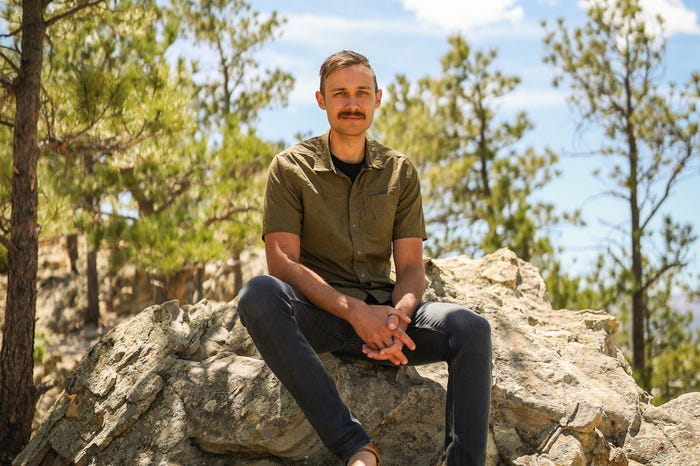
My guest on the CHOW (Creative Hero On Writing) is Ian Patterson. Ian is an award-winning author of science fiction, horror, and poetry. His debut, Transference, won the Colorado Book Award for science fiction in 2025 and is part of a complete series called The Narrator Cycle. His work critiques capitalism, inequality, and environmental destruction by centering philosophical discussions within the trappings of fast-paced, genre-bending narratives.
When he’s not writing, he’s typically riding his bike in the Colorado mountains or spending time with his family and two cats. Welcome Ian!
[IP] Thanks for having me on, Vince. Interviews like this are one of the highlights of being an author in public for me, so I really appreciate it.
[VW] So first off, there are a lot of Ian Patterson writers. There’s the poet. There’s the thriller writer. So, how confusing, helpful, and annoying is that?
[IP] It’s kind of annoying! I joked recently about getting spammed by AI book marketing scams, and half the time they’re not even mentioning my books, but one of the other Ian’s. Also, whenever I submit a new book on Goodreads, it gets added to Ian Patterson, the thriller writer, and I have to send in a help ticket. Mostly, it fades into the background, though. My middle name is James, good thing I didn’t choose to publish under that name! Although I do wonder how quickly I’d get a cease and desist from the James Patterson ghostwriting estate.
[VW] What is your writer’s origin story? When did you begin writing, and what pushed you to create larger fictional narratives?
[IP] There’s a lot here. I grew up wanting to be a writer - I loved reading and dreamed of telling my own stories. But somewhere in high school, I had a teacher convince me I was very bad at writing (essays mostly), and it turns out I was very good at math and science (and test taking - I got a very high standardized test score). I wanted a career that would afford me a comfortable life, and so I took out some massive loans and studied engineering. In college, I started riding and racing mountain bikes, and that dominated my life for about 15 years.
During all that I wrote in fits and spurts, but what I was creating never matched the vision I had in my head, and I just kind of accepted I had no talent for writing. I always read, though. I moved from the fantasy and horror books of my youth into classics and literary fiction. Around 24, I went through a major South American literature phase that got me into reading magical realism, and then from there, I really couldn’t stop. I never wanted to read something that wasn’t somewhat removed from reality again. I got back into fantasy, horror, and sci-fi around 2019.
From there, a lot of my journey back to writing was from extreme life changes. In 2020, my mom died of cancer. She was young, and there was a lot she regretted not doing in her life. I’ve written about this a lot, but it influenced me a great deal. I started getting my bucket list activities done. I hired a coach and raced at a professional level for a few years. I did my dream event, BC Bike Race, an internationally competitive seven-day-long mountain bike, and took 25th (seriously huge result, very proud). When our daughter was born in 2023, I knew that if I didn’t start soon, I never would. I bought a laptop on the way back from the hospital, and I’ve written almost every day since.
Unlike in my youth, I didn’t expect perfection. I took the same mentality I had from training for athletics and embraced that consistency improves performance more than talent or standout performances. I WORKED. Hard. And I was really bad for a while! The whole reason my publication is called They Don’t All Have To Be Good is because I wanted to embrace the ethos of the first draft, of learning, of raw creative practice. And I loved it. I felt alive in a way I hadn’t for a very long time.
I started trying to write a book for NaNoWriMo in 2023. I’d been writing for three months consistently at that point. My longest work was 5000 words. Longform was an experiment. I had an idea, I’ve always had my politics and known what kind of story I wanted to tell, and I set off. I completed that first draft in six weeks, and well, I just never stopped. I asked my wife if it was shit, and she told me to keep going. So I did.
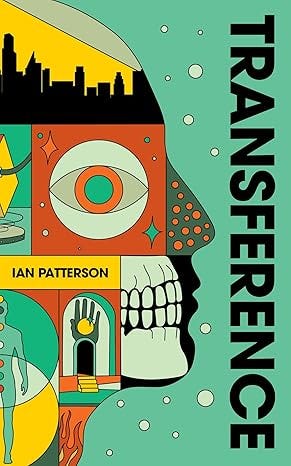
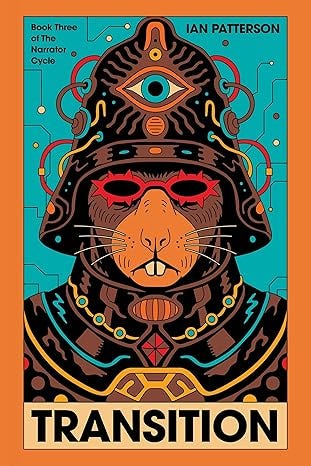
[VW] Your first novel, Transference, won the Colorado Book Award in 2025. Since then, you’ve also released two other novels (Transcendence, Transition) in the Narrator Cycle series. That’s a quick turnaround. Was it originally one large story broken up into three parts? Did you write the three separate books, or did you spend all of your time cranking them out in succession?
[IP] So I’m an insane person, maybe that’s a good place to start. My workflow has largely been to draft my next book while I’m waiting on edits and beta read comments on my current book. I knew the grand arc I wanted to tell between Transference and Transcendence at the start, so I was drafting Book 2 while I was editing Book 1. During edits on Transcendence, I actually took a break from the universe and wrote a sci-fi political drama called Fruits of our Labor that is being published by Shiraki Press this fall. I was enraged by the 2024 US presidential election, and carried that into a critique of the far-right. My wife loved a character from Transference, though, and I knew I wanted to tell more stories in that universe, so Transition was born from a conversation overheard at a bar in Taipei and some short fiction I was playing around with at the time. I started writing on the final book in the universe, Tranquility, but burned out on it and wrote The Cog that Spins the Wheel instead (on my Substack currently, published sometime in 2027).
So what is that...five novels in less than three years? While working full-time, raising a toddler, and racing bikes at a very high level? Like I said, I’m an insane person.
[VW] What is the Narrator Cycle about? And what was the kernel that pushed you to write the series?
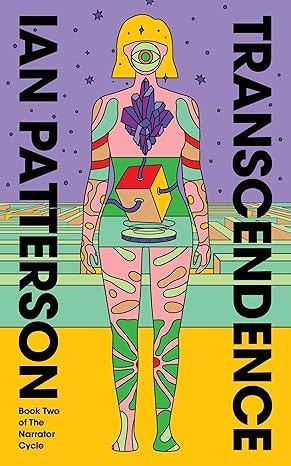
[IP] The Narrator Cycle is fundamentally a critique of hierarchical power structures and loss of agency (in a variety of forms). It’s meant to be fast-paced, heady, and philosophical, and to draw parallels to the world around us. When I started on the series, I wanted to write a critique of capitalism and the way it uses people up. I also wanted to critique our medical industry in the US that helps the rich live longer lives and lets poor people suffer (and more often can’t even be afforded by those in the upper class). I was listening to a podcast called Writing Excuses at the time, and they suggested a thought experiment where you tweak one thing about the world and follow the thread through. My daughter was super sick with her first real cold, so I asked myself: What if we could trade diseases? How would that reshape the world? And it was all so clear, immediately, where that thread would lead.
[VW] You have a real message in these books. How did you use Science Fiction to share that message that speaks to society today?
[IP] Some people talk about being a character-focused writer, or a plot-focused writer, but I actually see myself as a third option here. I write largely from theme. With everything I write, short or long, I have a thing I am trying to say, or talk about, or crack wide open. I think Science Fiction, or really any fiction removed from reality, gives us a way to talk about things happening in the world in a way that fosters more empathy by removing them from ingrained politics and thought patterns. And personally, I just think the aesthetics and ideas of Sci-Fi are cool as hell. I grew up on a steady diet of 80s / 90s sci-fi action movies (Total Recall, Blade Runner, Terminator, Fifth Element, Alien, The Thing), and that’s really the vibe I’m trying to create.
[VW] Is that part of your “why” for writing, to share a point of view? Or is there an inane creativity that is waiting to get out, and your point of view is the story for this outlet? Or a little both?
[IP] Absolutely it is! Like I said, at least at this point in my journey, I’m really driven by the theme or ideas of a piece primarily. The story and characters are built around that. There’s a risk of this being too didactic here, and that’s a line I try to thread all the time. I think a lot of the modern advice about didactic fiction being “bad” is hogwash though - we should have ideas and not be afraid to be clear about them. A lack of clarity doesn’t suddenly make your work more profound or intelligent. A lot of fiction strives to only ask interesting questions and leave it up to the reader to answer - I think this can be powerful but I’m less interested in it for my own art. I’m trying to say something, or to make someone feel a certain way. It won’t work for every reader, and that’s okay.
[VW] You do a lot of mountain biking around Colorado. How does exercise provide inspiration or thought to your writing?
[IP] Yes! I see exercise as an essential component of creativity, I think much the same way Haruki Murakami does. There is a curious relationship between being active physically and my brain working well that feels complementary. I even find myself going over lines and writing poetry in my head as I’m riding (and I’ll pull over and write them down on my notes app). I think the flow states of them are similar too.
[VW] Your cover designs are remarkable. Who can we credit for their originality, conveyance of story, and eye-catching visuals?
[IP] Thank you for saying so! I love them too. Baris Sehri did the art for all of my Narrator Cycle books - he’s a fantastic human and so great to work with. He’s also done art for other substackers - Alex Muka, Clancy Steadwell and Claudia Befu . You can see his other covers here:
https://www.sehribookdesign.com/
(Side Note: The CHOW has interviewed Alex and Clancy. Maybe Claudia soon?)
[VW] What’s next? More stories in The Narrator Cycle, something different? I know you like British spy stories, a la John Le Carre. Maybe you can partner with the other Ian Patterson?
[IP] Haha! I think Ian Patterson, the thriller writer, has very different politics. I don’t see that working out. You must have had to dig for the John Le Carre reference! I’m impressed. I do love him, and especially his spy stories... writing one is on my list at some point. Here’s the plan as it stands, though. Fruits of our Labor will be out in late August through Shiraki Press. It’s a sci-fi political drama that imagines a near-future America where women become able to reproduce asexually, and men become irrelevant to the future of the species. It has a lot of things to say. I’m in edit mode on The Cog that Spins the Wheel, a dystopian sci-fi action-sports novel that opens up a new universe for me to write in. The first draft is serialized on Substack, and that will be published in early 2027. While that’s off to my editor, the editor (Emil Ottoman), I have a horror book I want to write. This is one of those ideas I’ve had for nearly two decades and just haven’t had the writing chops to pull off. It’s ambitious as hell, and I want to traditionally publish it. If you’re an agent reading this, we should talk. Beyond that, maybe the final book in the Narrator Cycle series? Who knows what it’ll be at that point! I want to keep both a traditional publishing pipeline and indie publishing pipeline going.
[VW] Congrats on your success. And thank you for being a guest on the CHOW (Creative Hero On Writing)
[IP] It’s been an absolute honor. Thanks for having me here, Vince!
If you’re stepping into the “Space Between” for the first time…
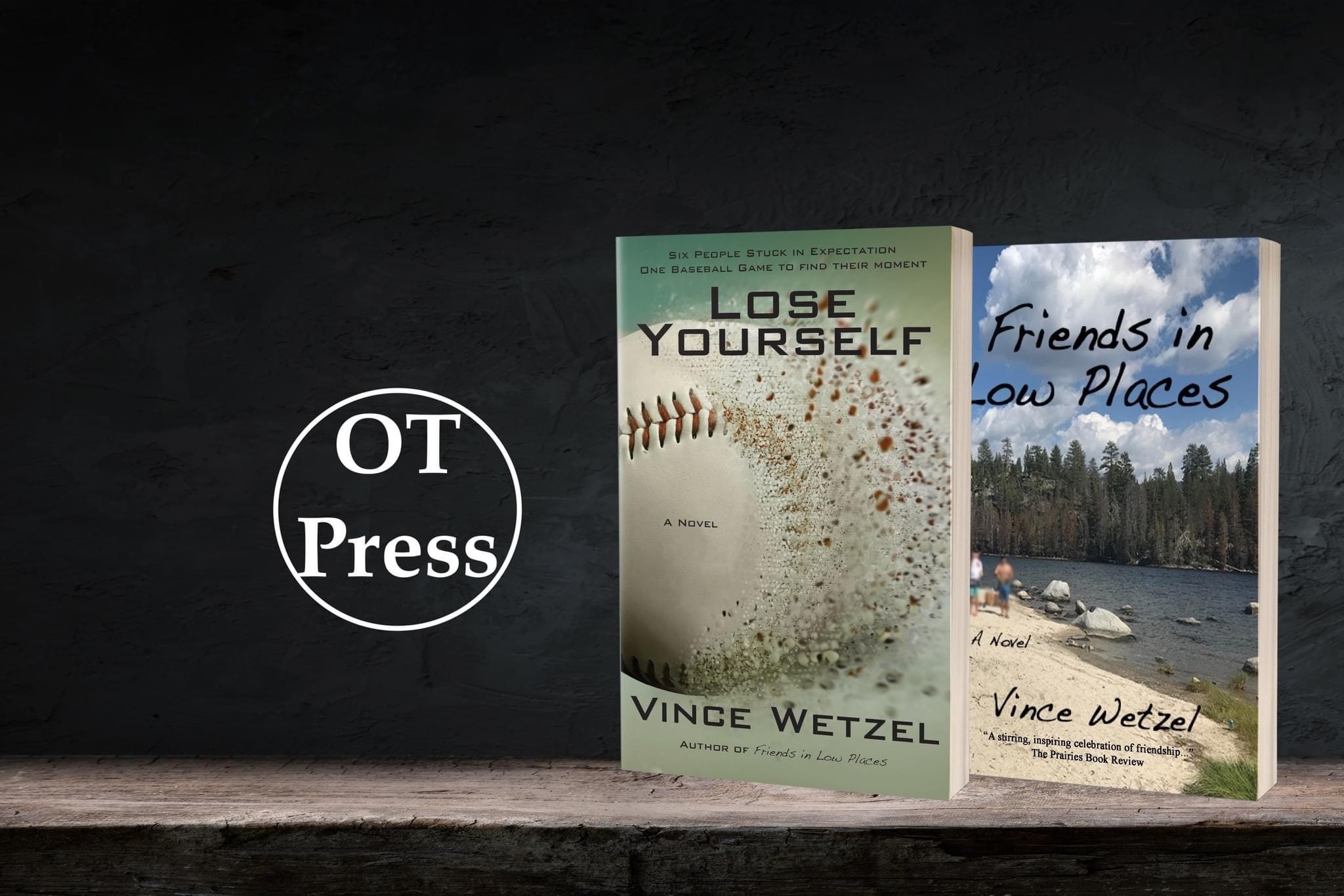
Welcome! You’ve arrived at a place where stories do more than just fill pages—they bridge the gap between the big moments of our lives.
Three years ago, I started this journey, wondering if I’d ever have enough to say. Today, I have the joy of knowing that every Friday at 5 a.m. PT, I’m sharing a story with you while you enjoy your morning coffee. This isn’t about chasing algorithms; it’s about doubling down on the “Why” behind my imprint, OT Press: telling human stories about the small choices that lead to real growth.
What to Expect
This is a living world where the characters you first met in Friends In Low Places and Lose Yourself continue to evolve. Here, you’ll find the threads that connect my novels, the current The Piano Man Chronicles, and my upcoming novel, Landslide. You’ll also get a front-row seat to The CHOW, my interviews with fellow authors about the spaces between their own milestones.
Why Subscribe?
I invite you to join our community and go deeper into the narrative. Subscribers receive special access to exclusive content, including:
New Stories: Bi-Weekly fiction bridging the gap between my novels.
The “Space Between” Guide: An insider’s roadmap to my interconnected universe.
Soundtracks & More: Curated playlists and behind-the-scenes updates.
Stay Tuned: I’m also preparing the Space Between Anthology, a remastered collection of these stories coming to print for the first time this July.
Thank you for joining me. I look forward to meeting you every Friday in the space between.
Thanks Vince, this was excellent to be a part of!