
France Pinzon: Typewriters, Power, and the Reality of Inheritance
The CHOW Interview: A discussion on the magical effect of manual keys and France's mission to bring Filipino voices to the global stage.

Life provides its own bit of entertainment, and I try to capture the conflict and joy that arise from what we experience every day. My stories offer a brief respite from this crazy life, and I hope you enjoy them. There’s something new every Friday.
Pull up a spot next to the campfire. Subscribers receive special access to exclusive content, including new stories, a guide to the “Space Between” the novels, soundtracks, and more...
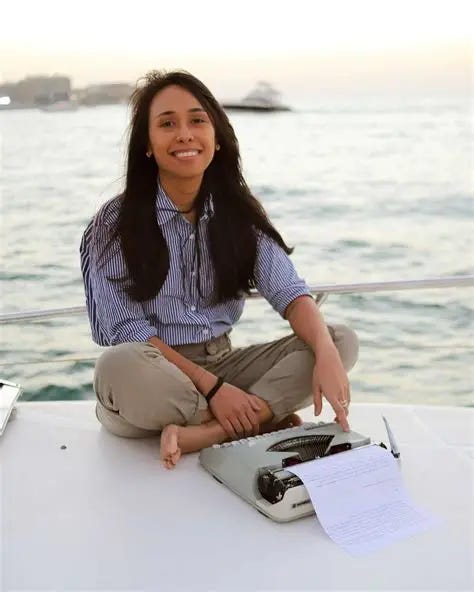
For this month’s CHOW (Creative Hero on Writing), I talk to France Pinzon • literary speck, a writer, editor, and entrepreneur, currently based in Southeast Asia. Her debut novel, Intrinsic, was released in November. She’s also a collector of typewriters and a fan of zine-making. Welcome France.
[FP] Happy to be talking to you, Vince!
[VW] So, like the great actor Tom Hanks, you write and collect typewriters. Should we expect an Oscar in your future too?
[FP] As a big fan of Mr. Hanks, I’d leave this distinction all to him.
[VW] Tell me a little about this obsession with typewriters. How big is it? And what’s the prize of your collection?
[FP] I’ve always been fascinated by typewriters ever since I was a kid. When my grandmother retired from being a teacher and principal, she became a writer of Filipino textbooks and would use a typewriter pretty much every day. This was in the late-90s. I remember it was a black, manual Brother on her desk, with the hood always open and the spools exposed so she could reverse-spin them quickly when the ribbon got to one end. Typewriters had the same magical effect on me when we got our first personal computer at home much later. I think it’s the key sounds. But of course, when you had a school paper to finish and the dial-up Internet was on, you always chose the more efficient one.
Anyway, during the pandemic of 2020, I saw a pink typewriter online—an Underwood 219 built in the 1980s—and bought it. It turned out to be a special one because it had the peso (₱) and letter n with tilde (Ñ) characters, which means it must’ve been distributed here because it had the regional features. I haven’t looked back after that, really. I immediately bought another machine—a 1940 Remington Streamline that had this sturdy metal body—built like a tank—and then months later a few more. I’ve slowed down a bit on the acquisition, and have intentionally kept the collection under ten. I still have a few holy grail models that I’d like to add, like a Hermes 3000 and maybe an Olivetti Valentine. The Valentine emerged in the 1960s during the counterculture movement. I feel like it’s a bit like Substack right now.
My most prized possession? By virtue of it being the oldest, I’d say the Corona 3, AKA the Folding Typewriter. Mine is a model from 1929—about to be a century old in a few years and still works well!
[VW] Do you use a typewriter for writing your novels? I played with the idea of ordering a typewriter-style Bluetooth keyboard so I could live out my inner Hemingway.
[FP] As much as I’d like to be like Danielle Steel, who to this day, still writes her drafts with a typewriter, the sad reality is, I live in the city, in a condo, and my neighbors would probably hate me for banging on the machine late at night or whenever I’m hit by inspiration. I’ve written a lot of letters on my typewriters, though. Mostly notes to my loved ones and letters to myself, usually about what happened to me that day and such. I do feel like I shouldn’t give up on typing an entire novel dream. I’ll maybe invest in more dampening pads and better soundproofing. I like those typewriter-style keyboards you were mentioning. I think one of the best things about using typewriters apart from the tactility, is the sound, and those keyboards capture that effect rather well. Also, I’ve been considering getting a Freewrite, which is a digital typewriter but you’re completely offline. They recently released a Valentine version and I’m a bit obsessed with it.
[VW] You grew up in the Philippines. You’ve been writing and editing, mostly non-fiction, since 2009. And in 2022, you wrote your novella, Cache ‘22, about typewritten letters. When did you first realize you enjoyed creating stories, and were there any early influencers in your life that inspired you?
[FP] I’m still quite a baby in the fiction-writing world, so I look at all my favorite stories in a new light now. That said, I think I’ve always dwelled on the creation side of storytelling, even before I tried my hand at actual writing. As a kid and teenager, I treated the books, television shows, and films I loved as models: The Wonderful Wizard of Oz, Sophie’s World, and Matilda were early favorites. I also read 1984 at a young age. I think the Back to the Future trilogy is a perfect sci-fi trilogy, and will die on this hill. I’ve also consumed far too many Star Trek shows.
I also can’t overlook my heritage. Philippine folklore has some of the most colorful stories that have shaped generations of Filipino writers. We have some of the scariest monsters and supernatural beings—the Manananggal, the Kapre, the Tiyanak—the list goes on. Likewise, our long colonial and tyrannical history, though unfortunate, gives us a lot of material. We were colonized by Spain for over 300 years, then by the United States for forty, and later endured a decade of martial law under the dictator Ferdinand Marcos Sr. The great inequality in our country is a long-standing problem, and it’s much worse now. Even being able to get paid to write is a luxury.
With all these varied influences and realities, and the fact that I’d already been doing some form of professional writing for over a decade, it eventually came down to an internal conversation: “When do I start writing with the voice in my head?” That moment came knocking hard in August 2022.
Admittedly, at first I thought, “I’ve always wanted to write a book by the time I’m forty. I still have three years—why not start now?” The original plan was a satirical travel memoir about my life as a Filipina outside the Philippines, especially after several years of serious travel. In the end, though, writing fiction turned out to be the greater challenge—and so obviously I’d much rather take that on. Typewriters became the perfect muse at a time in my life when the idea of obsolescence of the self had begun to quietly percolate.
[VW] Everyone has his or her own process. What is yours when beginning a new project? Do you plot it out? Do you discover as you go?
[FP] It’s interesting because when I wrote Cache ‘22, it was a bit like a fever dream. I wrote it in about a month and a half, rushing because I was afraid the story would run away from me—do you get what I mean? The story just came, and in terms of writing processes, I’d classify it as pantsing.
On the other hand, when I wrote Intrinsic, I intentionally wanted to stretch myself as a new writer. Having just finished Cache ‘22—a novella set a hundred years into the future about finding purpose when everyone tells you you’re no longer relevant—I thought it was time to try my hand at a full-length novel. That meant daring to play with more characters, explore more complex plots, and overlap multiple themes.
As I wrote the first draft, I realized it would take a couple more books to fully navigate the world I’d created in my head. I had to organize my thoughts early on. I scribbled a lot in my notebook because, at some point, you will get confused about timelines and characters—there was even a moment when two characters had the same name. Writing a summary before you dive into the actual writing helps you stay on track and not miss key points. I ended up writing or typing my summary almost every day. Outlining or plotting becomes especially handy when there are too many moving parts to rope into submission.
[VW] I always ask guests on THE CHOW what is your “Why?” What brings you to the keyboard to create your stories?
[FP] Other than fame and fortune? Just kidding. It’s the lack of voices coming from my side of the world. I feel like there’s a lot to learn from one another and there is no wrong way to go about it other than openness to exploration and learning. I can’t tell you how many times I’ve had to fight the urge to judge a place, an activity, or someone too prematurely. It’s in our nature to be cautious, yes, but curiosity pulls us forward.
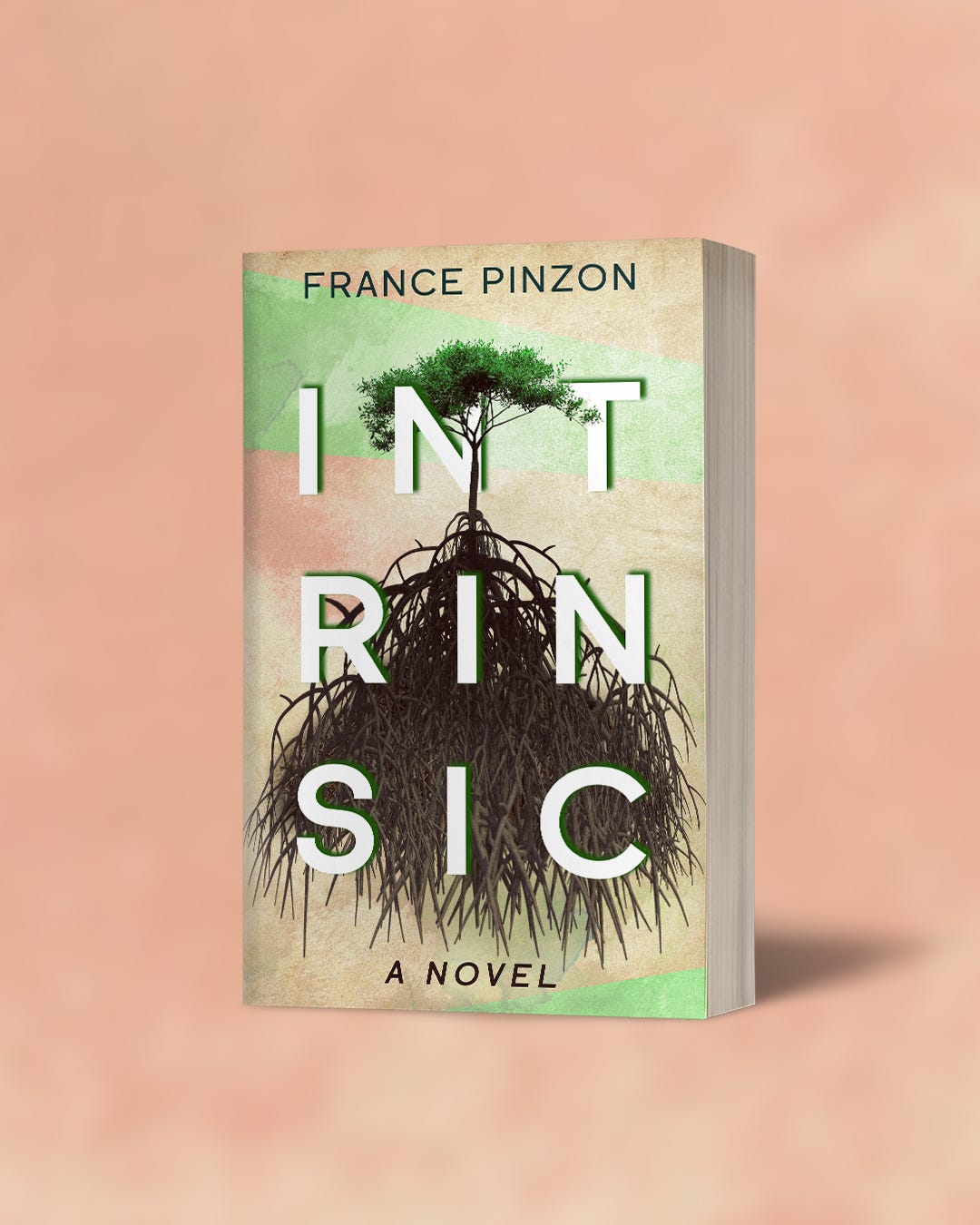
[VW] Your coming-of-age novel Intrinsic follows 17-year-old girl Anne Reynes as she comes to terms with a past she doesn’t quite understand, while also navigating adolescence and a destiny others have determined for her. It’s a story of politics, adolescent insecurity, dynasty, destiny, and finding yourself along the way. What was the inspiration behind the story?
[FP] My conceptualization of the story began with a question born out of my frustration in Philippine politics: “What if a whole nation’s search for the best leader is doomed to fail each time because it was designed that way?”
You see, our country’s politics right now is full of dynasties—mayors, representatives, senators, all the way up to the presidency. It has made me think a lot about how the laws have worked in favor of keeping only a few families on top, that even if you’re a child of a corrupt mayor, who would like to be a doctor someday, “Well tough luck, kid. You’re just going to have to settle with being a senator as soon as you hit thirty.” I joked around that Intrinsic is the origin story of a nepo baby.
[VW] The book takes place in the fictional Southeast Asian country of The Groves? Was it freeing to create an entire world within the constructs of a modern reality?
[FP] It was! I wanted that newer, bigger playground that still felt familiar, because then I could set my own rules without needing to overexplain. I wanted Intrinsic to have some Filipino elements, without worrying about direct comparisons. Additionally, the making of Groves Island gave me the opportunity to think of a seemingly progressive, idyllic country, and since it’s still run by humans, of course it will still end up being imperfect. That’s what I’m choosing to focus on.
[VW] Intrinsic is now available in paperback and ebook, but it was originally published on Substack as a serial. What was that process like for you? And how did you approach it? Did you write and edit all at first, or did you publish as you wrote?
[FP] I finished writing Intrinsic over two years ago, and it was while I was in the middle of writing its sequel Resistant (Book 2 of the trilogy) early last year when I realized that Book 1 had to be released to propel me to the end. At first, it didn’t matter to me whether it should be serialized or not—it just needed to be out there in the wild, fast, for my sanity.
If you’re an unpublished author with no one else to write for but yourself, you’re holding a candle, but the dark void is as big as the entire space you roam around in. I think I needed to see a few distant candles lit up to feel that I haven’t gone blind or something.
I also just felt that pressure can help writers in making firmer decisions at various times and in different situations of their life—it was that moment for me. I needed to be publicly judged once and for all about my fiction. After I decided that Intrinsic needed to be out there, for other people to read, the next question became, “How are you going to publish it?” and I remembered Substack was the platform that was recommended highly for new or aspiring authors. I had signed up a while back but never really used it, so I finally gave it a shot around April.
When it came to deciding whether or not to publish the story chapter by chapter, I was dead set on it quite immediately when I saw that others were doing it or had done it—Peter Shull, Ian Patterson, Jörgen Löwenfeldt, Clancy Steadwell—they all had their take on how to serialize their novels on Substack. I just tweaked their approach to my liking because I knew that self- publishing it as a book was also an option eventually. I’ve been learning a lot from my peers here—including you, Vince—and one thing I just love about fellow indie authors here is how helpful and supportive they’ve all been, and that’s important when you’re still a bit new to it.
[VW] And this is the first of a trilogy. What is Book 2 about, and when should we expect it? Will this be released first as a serial and then in traditional book form?
[FP] Resistant (Book 2) is slated for release later this year—fingers and toes crossed. The story of Anne Reynes continues five years after where Book 1 ended. So she’ll be the same nepo baby with all her personal baggage, dealing with much more adult issues, with the Groves government in the midst of a swelling crisis.
I haven’t fully decided yet how exactly I’m going to release the sequel. I’ve learned a lot about the importance of timelines, so I’m going to review all sorts of scenarios. Nevertheless, Substack is still going to be very much utilized in the launch and marketing side, for sure.
[VW] You shared that you love the Beatles, and you’ve even seen Paul and Ringo in concert, separately. I’ve recently watched the Beatles anthology and the Get Back documentaries on Disney+. Two questions? What is your favorite Beatles album? And, who do you think was thebest songwriter? John, Paul, or George?
[FP] There’s a Beatles album for every stage in a person’s life. Right now, I’m in a sort of Please Please Me phase, after being stuck in Help! for years, and Abbey Road before that.As for your other question, this is like asking a parent who their favorite child is, to which the answer is: depends on who embarrassed them the least. Jokes aside, they’re ALL gifted writers, truly—and Ringo’s “Don’t Pass Me By” is such an underappreciated song. But if I were to choose just one, and I’m not just saying this because I saw him in concert, I’d have to go with Paul. I just admire the untiring dedication to the craft and the work ethic. You’d watch these documentaries about them and it was always brought up—even by the band themselves—how Paul was the most workaholic—even to a fault. I feel like becoming a great songwriter or writer in general isn’t just about having talent, but also has a lot to do with how disciplined and diligent you are choosing this as a long-term passion, let alone career.
[VW] Thanks again for joining me today.
[FP] It was a pleasure answering your questions! Thank you for this opportunity, Vince.
If you’re tasting the Salted Wetzel for the first time…
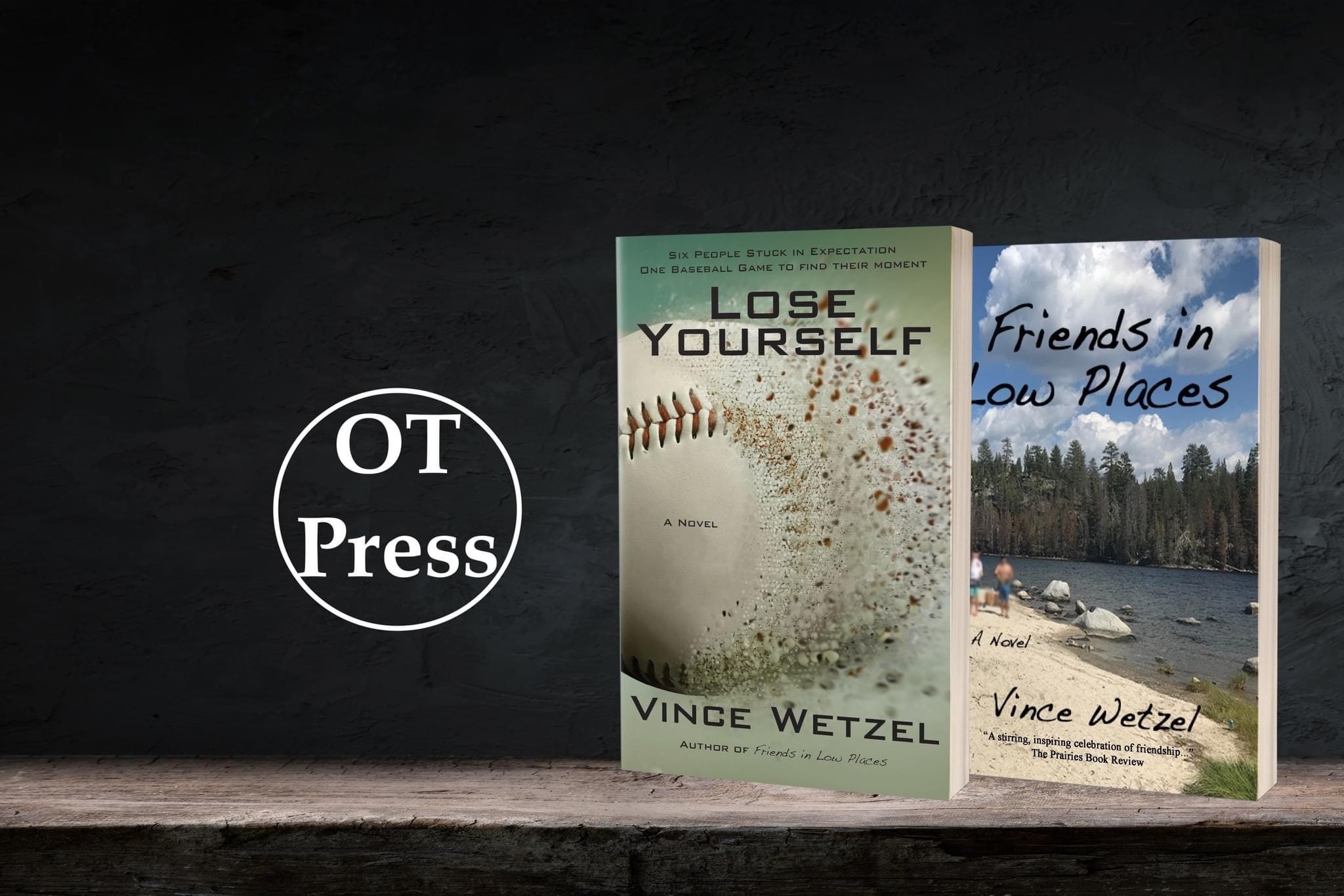
Welcome! I’m Vince Wetzel, author of FRIENDS IN LOW PLACES (2021), the award-winning LOSE YOURSELF (2024), and a third novel currently in that precarious editing phase of unreadable and mildly entertaining. This newsletter is my literary sandbox, emotional junk drawer, and occasional cry for help disguised as content. It features short fiction, fridge philosophies (you know, the good quotes you see someone important said and you wish you had come up yourself), interviews with authors who are far more interesting than I am, and random thoughts, reviews, and side bits that didn’t make it into my books because they were either too weird or too honest.
I’m a husband, father, and California dweller who enjoys falling asleep to televised sports that move slower than my writing process. I read compulsively, enjoy touring the brewery scene with my buddies, and occasionally pretend I understand world events.
If you’re looking for polished wisdom or life hacks, you’re in the wrong inbox. But if you enjoy fiction with bite, musings with heart, and the kind of humor that masks deep existential dread—pull up a chair. I promise not to overshare. (That’s a lie.)
Salted Wetzel with a side of mustard is a reader-supported publication. To receive new posts and support my work, consider becoming a free or paid subscriber.
Thank you, Vince! Loved your questions!