
Writing Herself Free: Erica L. Drayton on Identity, Imagination, and 100 Words at a Time
The CHOW: In this latest interview, Erica reflects on poetry, fantasy, burnout, chickens, and the freedom she finds in distilling life into bite-sized stories

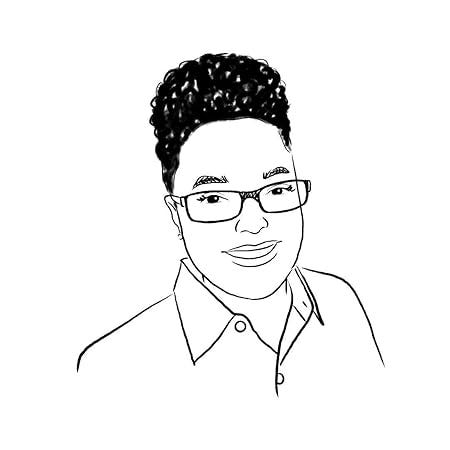
Welcome to this month’s The CHOW, where one Clueless Hack on Writing talks to a Creative Hero on Writing about inspiration, process, and the prospects of writing.
Erica L. Drayton was born in the Bronx in NYC. She began writing stories almost immediately after learning to read and write from her mother, a former English teacher. As a gay, black woman, Erica used storytelling as a way to express her feelings through poetry and fantasy novels at a young age. After college, she took her continued passion for storytelling and developed it further, into writing short stories, eventually challenging herself to write 100-word stories. She lives with her wife, young son, two dogs, and eight chickens in the Capital Region in Upstate New York.
[VW] Welcome, Erica, and first off, tell us about your chickens? Do you have more eggs than you can handle? Are you making quiches, frittatas, and omelettes every day?
[ED] HA! I don’t think anyone ever asks me about my chickens. Actually, while they do live in the backyard in their coop and run, they are my wife’s chickens. She wanted them, and wherever we live, they need to be allowed. They are doing well. In the winter, fun fact, chickens don’t lay. They only lay eggs in the other, less cold, times of year. Unless you do things to trick them into thinking it’s not winter, and they might continue to lay in those times of year. So, we are buying our eggs like everyone else. But when they do lay, we are pretty much set. Another fun fact, they don’t lay forever, and we’ve had these chickens for quite a while so that that time will be approaching pretty soon.
[VW] Are you originally from upstate New York? What do you remember as the first story you wrote when you were a child?
[ED] I am originally from New York City. Born and raised in the Bronx (Da Bronx) in the “hood.” I lived there until I was brave enough to move out of the hood and go away to college in the middle of nowhere, New Hampshire. Then I moved back home and stuck it out in the Bronx for a bit longer until I met my wife and moved cross-country to California, where we lived until the pandemic. When we realized that for my job, I could now live “anywhere,” it came down to family for us. My wife is Canadian and at the time the Canada border was closed, so we decided to move back to the East Coast to be closer to my family. It was also an opportunity for me to do something I never thought possible, which was to buy a house! So, we looked at various places in upstate New York and landed on a place in Central New York. Then the pandemic lifted, and we were looking to grow our family, so moving out of Central New York was important for us to give our son the best life we could. And that led us to the Capital Region, where we are now.
Growing up, I loved the idea of being a storyteller. As a child, I was a voracious reader. My mom taught me how to read. She was a high school English teacher to “young mothers” at a time when young women who happened to be pregnant were not afforded an education, she found a place that wanted to educate young women who were forced out of the school system because they were pregnant. I was lucky to have a mom who was a teacher, and so she taught me how to read, write, and do math before I started school. My earliest memory of when I picked up a pen to write a story would be in middle school. And strangely enough, I was writing screenplays and poetry! I can remember thinking up a television show, like 90210, and creating characters and writing back-and-forth scenes. Even including our mutual friends who would act out the scenes. I would type them on the computer and my mother’s job after school, and on days when I got to go with her to work. The poetry writing was very private. I never showed anyone that stuff. I didn’t write my first story until high school. An ambitious murder mystery that was meant to be a take on Agatha Christie’s And Then There Were None. I can remember going to Wikipedia and searching for an island I could use as the setting for my story. I still have it somewhere, nested deep in some computer folder I’ve held on to all these years.
[VW] Your bio shares that you use your storytelling to express yourself and your identity. What freedom do you receive through storytelling that you may not necessarily receive in normal-day life?
[ED] Knowing I was gay and telling the world I was gay are two different things. I think being able to express my feelings about women helped me to hold onto this secret for as long as I could. I wasn’t sure if anyone outside of me would be okay with it. Not my mom. Not my best friend. Not anyone. I think that’s why I was able to gravitate towards poetry. The easiest form of private self-reflection and a way to put into a jumble of words what I’m feeling without needing to make any real sense of it all. I explored things about my body and my sense of self that no one will ever know, but it was a great cathartic way for me to just “let it all out” and find peace with it.
It wasn’t until I watched the movie, By the Light of the Silvery Moon, that I really realized the power of telling a story! It’s funny to me now because unless you’ve seen that movie, you can’t really know how I could jump from writing poetry and screenplays to then wanting to write a novel, let alone a mystery in the same vein as Agatha Christie. And if you have seen this movie, you would still be asking yourself the same questions! Mainly because By the Light of the Silvery Moon is a musical. Starring Doris Day and Gordon MacRae. I will actually watch this movie, but only in case of an emergency (i.e., I’m having writer’s block). There’s one particular scene involving one particular character, Wesley (a 9-year-old boy), who has a pretty vivid imagination. It’s important to the movie for reasons I won’t get into, but the scene involves him sitting up in bed, wearing his detective hat, writing a story based on a detective solving a crime. I don’t know what it is about this particular scene, but it immediately makes me want to pick up a pen and paper and write! And, at the end of the day, whatever gets us writers motivated is all that matters, right?
[VW] You’ve written a fantasy series called The Fifth Compass and The 100 Word Stories Series. What drew you to your fantasy series? And what did you learn through that process?
[ED] There was a time in my life when I was inhaling so much Young Adult fiction. More specifically, fantasy YA. I just found it very easy to read. I could get through one book in just a couple of days (2 to 3 max) and then move on to the next. And so, it made sense for me to do what all the “I know how to write a book” gurus say to do, which is to “write what you know.” And I felt like I knew how to write YA fantasy because it’s what I was reading all the time.
What writing that series taught me was two-fold:
First, the art of failure. I never did finish that series. And the reason I never finished that series takes me to the second lesson I learned from it…
The great burnout. I crashed and burned so hard. It was too ambitious. I was too naive. I didn’t know the first thing about taking on writing anything, let alone diving in headfirst on an epic fantasy series! I will boast how I managed to write 20k+ words in one day and 90k+ words in the first book in 13 days. YAY, right? Wrong! I came out of that experience in tears. Having nightmares. And questioning the choices I was making in my life to do that. Was it sustainable? Was this the dream I had when I thought I wanted to tell stories? Hell no!
It was that series that made me realize I needed to take a LONG step back. Not stop writing. Just step back from the rose colored glasses I had on that made me think it would be easy and manageable. Especially, since I neglected to research the background of these people I was listening to. Some of them had never written a novel themselves (yet, they had ALL the answers for how I could and should write one) or if they had, they had the TIME to do it because writing was their J-O-B. Writing has never been how I earn a living, and trying to think I could magically take 24 hours and only sleep for 8 of them and do nothing else but write and churn out book after book after book was just never going to happen. I needed to pivot.
[VW] You’ve also serialized them and put them into your Substack. Is this story finding a new audience?
[ED] I don’t know if it’s finding a new audience. Honestly, I started serializing this fantasy series because I needed to trick myself into thinking I was doing the work I wish I could be doing in real-time. Aside from my 100-word stories that I’ve been crazily writing for years now, what else was there to me? I felt like a huge part of me was being sucked into this thing of daily writing that started out great, but was quickly becoming my entire life! I needed people to know I was more than just 100 words, but I pigeonhole myself into it. I couldn’t find a way out. I also was scared that maybe I was becoming only as good as those 100-word stories I released every single day.
So, I went back into my vault of work and decided this series was okay enough to release and hope it will spark something in me to break the cycle of 100-word stories and do more. I can’t say that’s happened yet, but…as one of my favorite characters from literature and the movie, Scarlett O’Hara, famously said, “After all, tomorrow is another day.”
[VW] Now, let’s talk about your 100-word story series. You pledged to do it for 1000 days. That’s nearly three years. Where are you on this journey, and how many have you written?
[ED] I am actually nearing the end of this journey. I’ve crossed 950 and in the final days. I don’t know where I am in the journey. When I reach 1,000, will that be the end or the beginning? I can say that I’m terrified. That much I do know. There is a lot of unknown space I’ll need to take up with…something…and that scares me.
I am a planner. In my day-to-day life and in my 9 to 5 job and especially in any projects I handle outside of those two areas of my life. I go into nothing blindly. I need to have a plan. Whether it’s a 1-day plan or a 5-year plan. Erica always has a plan. I don’t have one for January 25, 2026. That’s the day after story 1,000 happens, by the way. I keep thinking that maybe I should just make one. Plant my flag and say, in 2026 I’m going to write X or do X. But I also like the thrill of not knowing for once. Not having a plan. As someone who succeeds and fails based on the plans I set out for myself, that will be interesting to see. Will I fail miserably and produce nothing because I really am only as good as the 100 stories I chose to just stop writing or will I rise to the occasion and prove myself wrong and kill it with the great (longer) stories I’ll go on to write in 2026? Only time will tell.

[VW] What prompted the shift to these 100-word stories?
[ED] As rigid in my planning as I am, I am also quite spontaneous. I get an idea and I just do it. Top in Fiction was an idea I had one morning, and by the afternoon, I had the Substack up and running and the spreadsheet and templates ready to go by that night. The 5-year plan the next day. I move very quickly when I get an idea.
The 100-word stories were a culmination of things all happening at once for me. Picture it, May 1st, 2023. I had just finished scrolling Substack when I came across Jimmy Doom. He’d been writing much longer fiction daily, and I found myself saying, “I can do that.” But being me, I know I always have to 1-up my own challenge to myself. I couldn’t just write a short story every day. I needed to prove I could do what I felt would be harder for myself.
At the time, I had been going through my old work for a spark and I came across some Drabble’s I had written back in 2019. I learned about the practice of writing exactly 100 words back then and wrote a couple. And from these two things happening at once, an idea, and a challenge was born.
Now, at the time, I wasn’t really looking to write for 1,000 days in a row. I think I may have just wanted to do 100 days. Seemed like a good round number. But then I thought, why not 250 days in a row? Before I knew it, I had published The First 100, and I was already well past 500 days. And what made it so easy was that I had so much content to draw from. My love of Tarot cards and the collection I was amassing. The material was almost writing itself and took on a mind of its own.
[VW] Is it easier or harder to write with those constraints? Does it get easier the more you do it?
[ED] I am at a place with writing 100-word stories that, if you were to ask me to write one without the aid of a word counter, I could write one within +/- 10 words and just stop and have the completed story. Sometimes I amaze myself, and I can start writing one and just stop and check the word count, and it’s exactly 100 words. I can visually look at a story and can tell if it’s more or less than 100 words. Is that some sort of superpower? I don’t know. It’s a muscle memory, I think. A habit I built over time that anyone can have if they do it long enough. It’s why January 25th is a date that terrifies me the most. It will be like taking drugs away from an addict. How easily will I be able to just STOP writing these stories every single day? I may write one the next day, but I can promise you that I will not post it. I’m stopping the act of sharing 100-word stories, but I think I will need to slowly wean myself off of writing them daily over an extended period of time. SEND HELP!
Something else I will say is that I can also write these stories in 15 minutes or less. They have become surprisingly easier to write. And they’ve had to because in the last year or so I’ve taken to writing them at night. It’ll be 11 pm, and I’m stressing myself to write it because I insist that it’s done before midnight, otherwise the streak just isn’t there and it’s broken. Must meet the deadline of writing one per day.
[VW] What has the 100-word constraint taught you about writing? I’m sure you have to be economical in your word choice.
[ED] It has taught me that a lot can be told with very little. But that can be a double-edged sword in many ways. While I can condense my storytelling to just 100 words, it means my ability to write much longer prose has become stifled in the process. I’ll admit it’s because I didn’t exercise my short story muscle quite as often as I should have.
[VW] You also publish Top In Fiction on your Substack. Why did you start that?
[ED] I started Top in Fiction because of the old adage “why wait for someone else to fix the problem,” and there was a huge problem (still is) with the “algorithm” that Substack has put together. At least, as far as it pertains to the fiction community. And for what seems like forever now, many of us have complained to those in charge that we are not properly represented nor easily found because of this lack of proper fiction representation in places like the Discovery page and Leaderboards. So, I took it upon myself to see what I could do to maybe help.
I didn’t realize just how big this would grow and what would inevitably spawn from starting Top in Fiction.
[VW] How do the writers with whom you come in contact inspire you?
[ED] I love a challenge, especially one that has controllable parameters. What do I mean by that? Well, I think less about the topic or the genre of the stories I read and more about the amount of output I see others around here doing. I’m inspired to do more because I see others doing far more than I do.
[VW] What’s the best way for authors to think about their success?
[ED] I measure my success by what I did yesterday. If I do the same or just a little bit better than the day before, then that’s compounding interest and the best measure of success. I can’t base my success off of how someone else is doing because it’s not a controlled environment. The second I compare myself using parameters and tools that I have no control over, that’s when I find I lose control of myself, and self-doubt creeps in.
The only time I’ve ever doubted myself was when I was comparing myself to another person based on stats I had zero control over.
[VW] What’s next for you?
[ED] After January 24th, I enter a whole new territory. No more 100-word stories. Just short stories for a time. I need to prove to myself that I’m more than just a quick 100 words here and there. I’d like to self-publish some short story collections.
[VW] Erica, thank you so much for joining me today.
[ED] Thank you so much for asking me to do this. It was great fun!
Side of Mustard
If you’re tasting the Salted Wetzel for the first time…
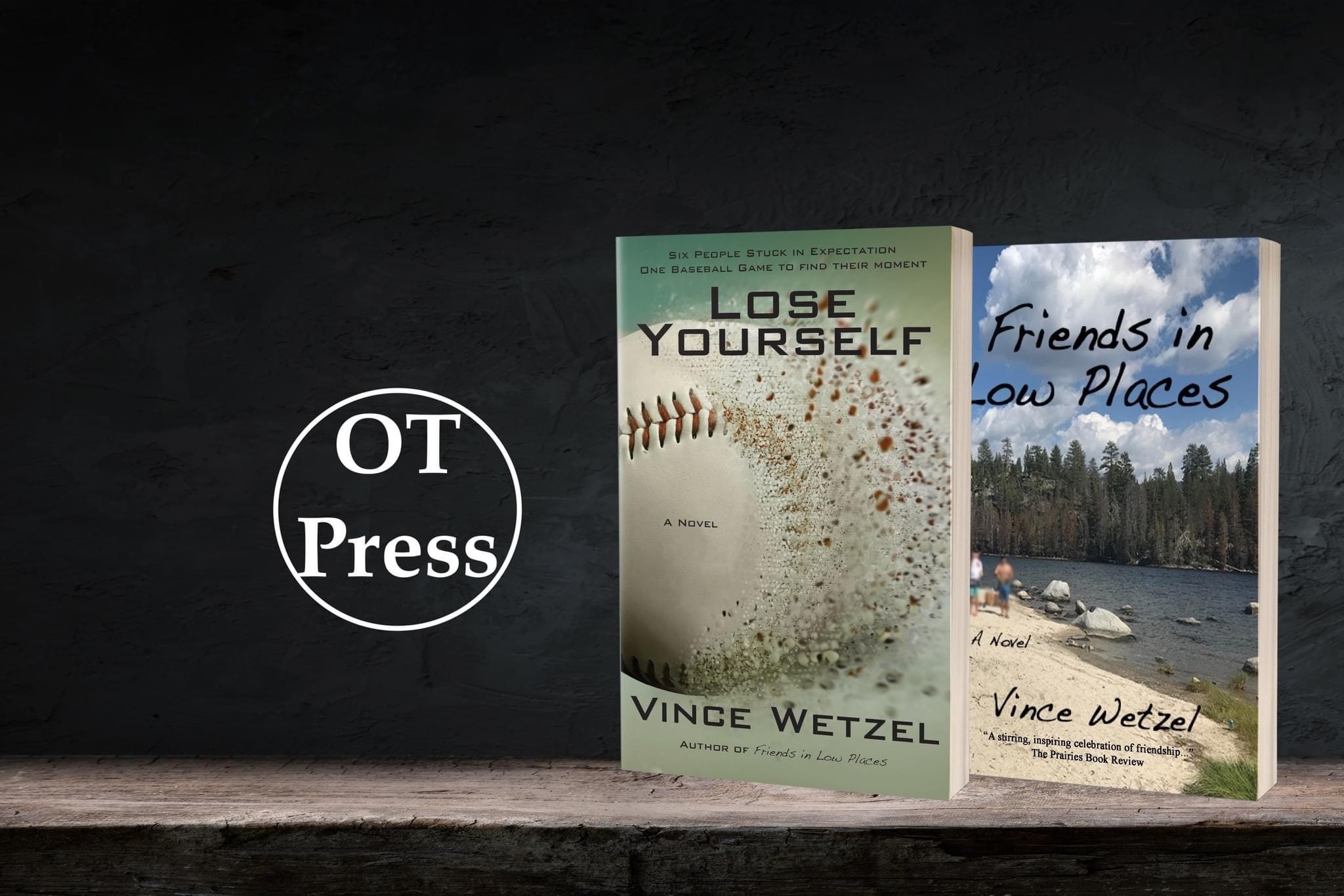
Welcome! I’m Vince Wetzel, author of FRIENDS IN LOW PLACES (2021), the award-winning LOSE YOURSELF (2024), and a third novel currently in that precarious editing phase of unreadable and mildly entertaining. This newsletter is my literary sandbox, emotional junk drawer, and occasional cry for help disguised as content. It features short fiction, fridge philosophies (you know, the good quotes you see someone important said and you wish you had come up yourself), interviews with authors who are far more interesting than I am, and random thoughts, reviews, and side bits that didn’t make it into my books because they were either too weird or too honest.
I’m a husband, father, and California dweller who enjoys falling asleep to televised sports that move slower than my writing process. I read compulsively, enjoy touring the brewery scene with my buddies, and occasionally pretend I understand world events.
If you’re looking for polished wisdom or life hacks, you’re in the wrong inbox. But if you enjoy fiction with bite, musings with heart, and the kind of humor that masks deep existential dread—pull up a chair. I promise not to overshare. (That’s a lie.)